
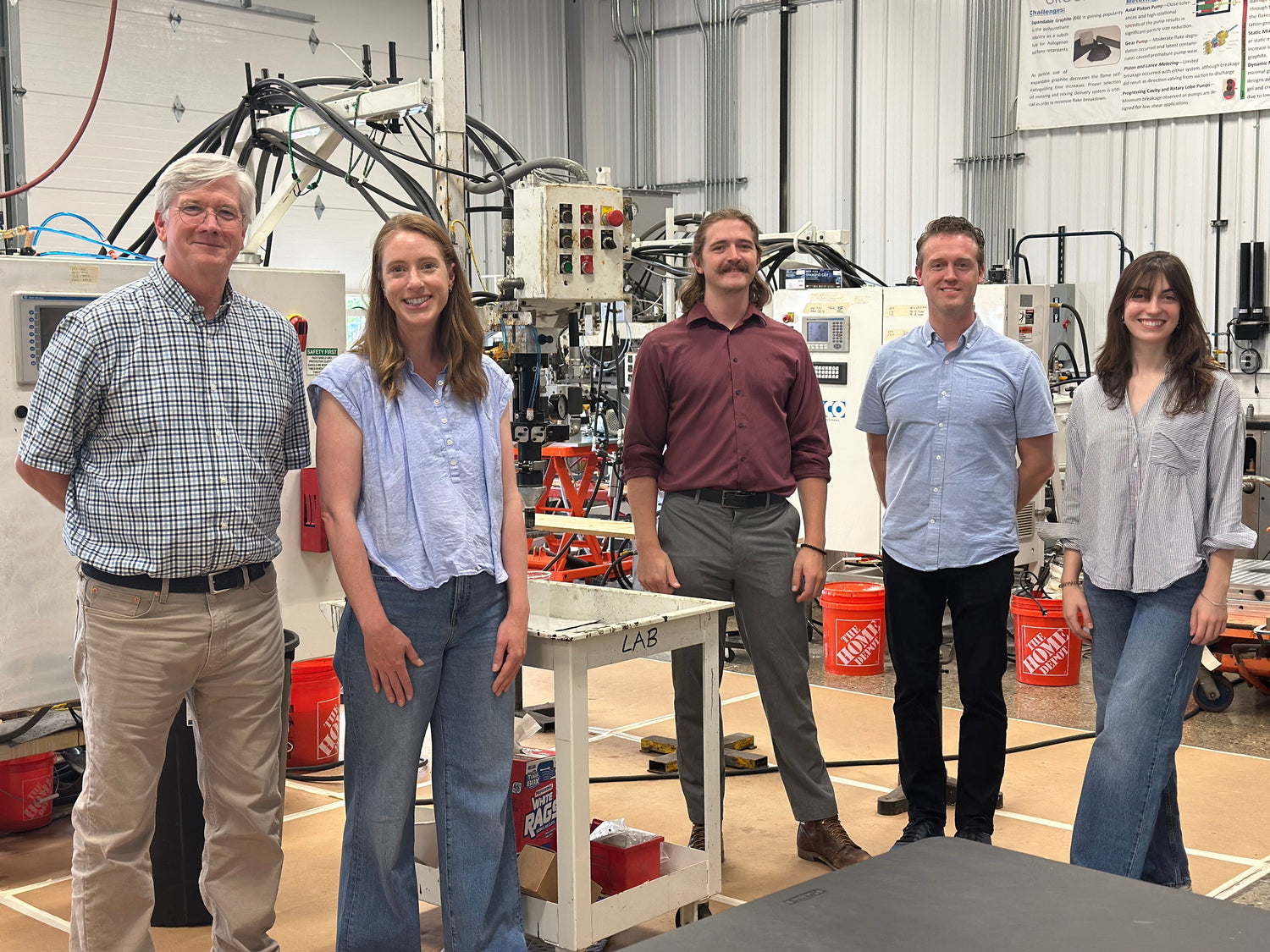
Progress is rarely linear, and that’s exactly the point. Innovation happens through testing, iteration and learning in real-world conditions.
2025 marked a pivotal year in Flora’s journey. What began as material research continued to evolve into manufacturing readiness, performance validation and on-site installation.
This work, at turns deeply challenging and rewarding, resulted in real, meaningful progress toward a cleaner alternative to fossil fuel–based flooring. Each milestone brought Flora closer to a future where high-performance building materials no longer rely on petroleum, toxic additives or extractive systems.
Refining the Material Through Iteration
Throughout 2025, Flora continued refining its bio-based flooring system with a focus on performance, manufacturability and installation flexibility. Multiple prototype iterations explored different tile thicknesses, composite formulations and surface behaviors, with each adjustment informed by hands-on testing.
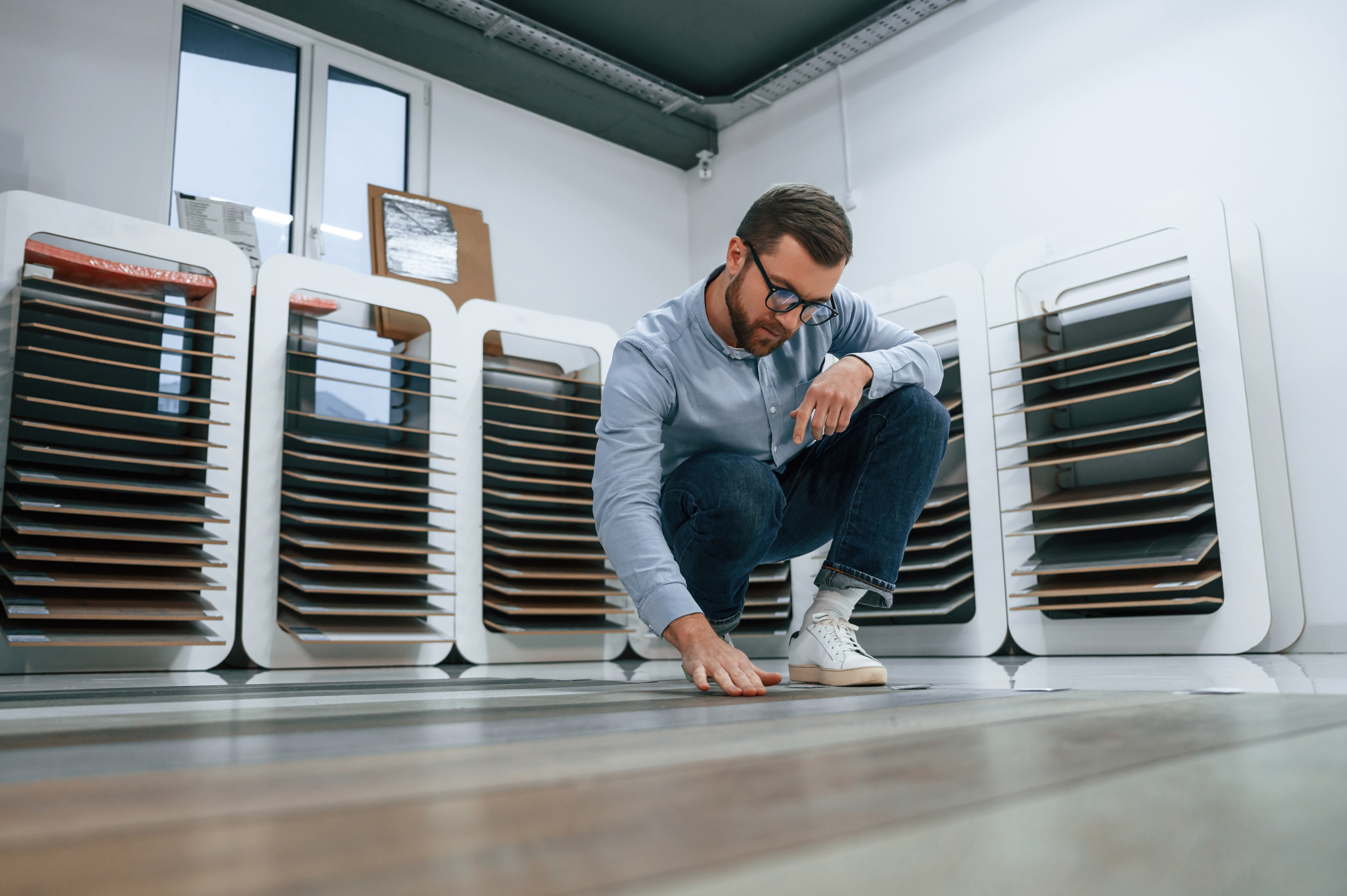
One of the most important areas of learning involved short-term indentation. Early real-world installations of one particular product make-ups revealed that while the material naturally rebounded after furniture was removed, improving resistance to temporary dents would be critical for commercial use. Rather than viewing this as a setback, the team treated it as a valuable data point. That insight led to continued experimentation with filler composition and structural reinforcement, helping guide the next phase of material refinement.
At the same time, Flora worked to expand installation options. By adjusting the system to support both mortar-down and glue-down applications, the team increased compatibility with existing flooring workflows. This flexibility will be essential for broader adoption by installers and contractors.
Behind the scenes, progress was also made in streamlining the manufacturing process. Refinements to curing behavior, consistency and production flow helped eliminate early-stage issues and laid the groundwork for future scale.
Proving Performance Through Industry Testing
In parallel with material refinement, 2025 marked a major step forward in performance validation. Flora’s flooring tile successfully passed a comprehensive range of ASTM tests covering UV resistance, static load recovery, chemical resistance, abrasion resistance, slip resistance, and fire performance.
These benchmarks matter because they demonstrate readiness for real-world use. Flooring is one of the most demanding product categories in the built environment, and meeting established ASTM standards is a prerequisite for commercial and institutional applications. By validating performance against these criteria, Flora reinforced its core belief that bio-based materials can meet the same expectations as conventional products without compromising durability or safety.
Advancing the Resin
Another key area of progress in 2025 was the advancement of Flora’s resin chemistry. We made meaningful strides toward eliminating hazardous chemistry while increasing overall bio-based content and improving long-term material performance.
This work remains ongoing, but each formulation and curing experiment contributed to a deeper understanding of how bio-based chemistry can perform at scale. Together, these efforts are helping move Flora closer to a material platform where performance, safety and sustainability are embedded at the most fundamental level of the product itself.
Moving From Prototypes to Production
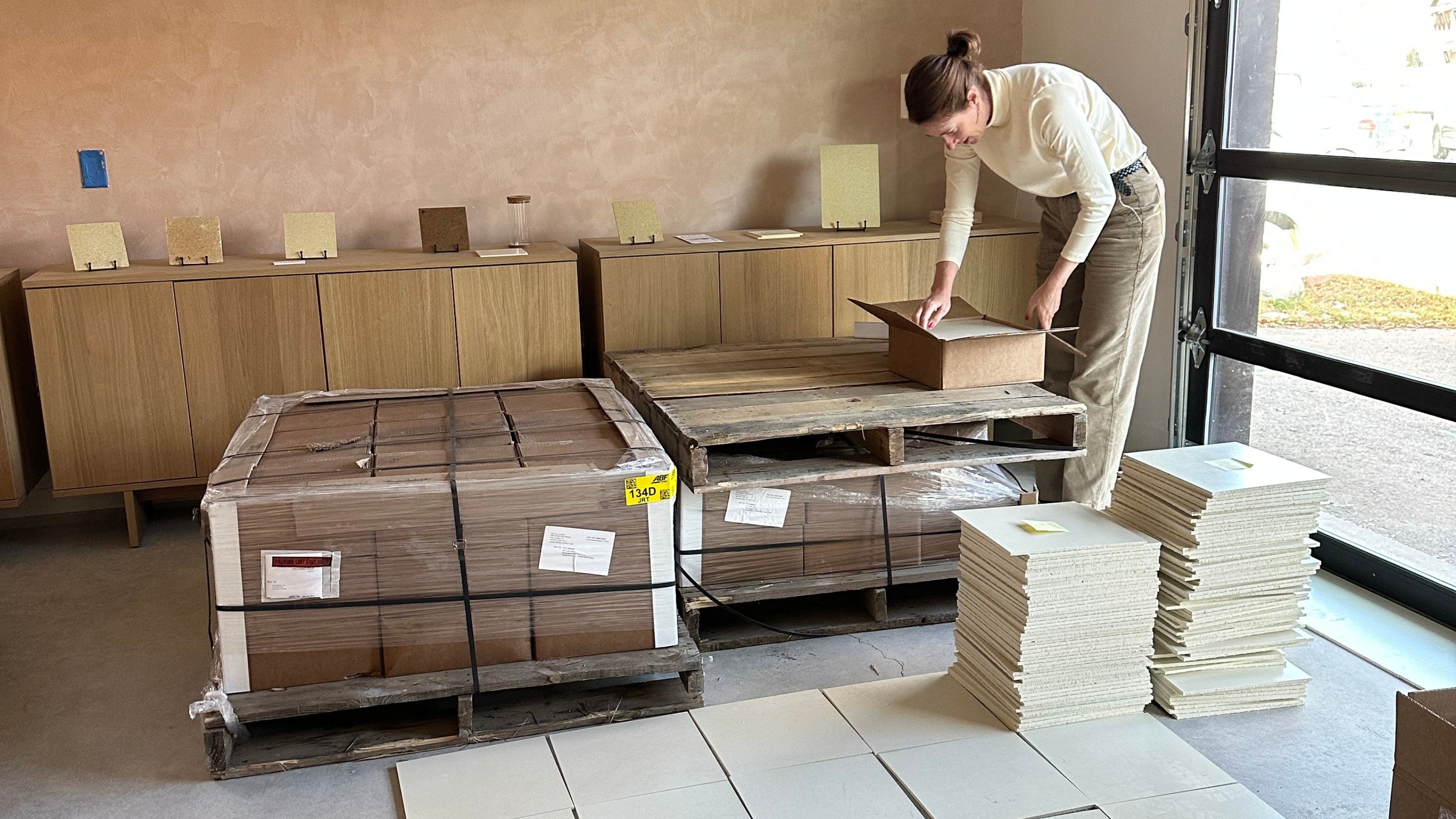
The most tangible milestone of 2025 arrived in the fourth quarter, when manufacturing partner PURforms completed Flora’s first production run of bio-based flooring tiles totaling approximately 800 square feet. This marked a critical transition from small-batch development to real manufacturing conditions.
Shortly after, the tiles were installed inside Flora’s headquarters in Carbondale, Colorado. This installation became a living test case, allowing the team to observe installation behavior, wear patterns and daily performance over time. It also provided a hands-on demonstration for collaborators and visitors, showing that Flora’s materials are not only viable but ready to function in real spaces.
Learning From the Field
Throughout the year, Flora distributed samples to a growing group of installers, contractors, designers, and flooring representatives. Feedback consistently reinforced the product’s performance and aesthetic potential while offering practical insight into installation preferences and manufacturing tolerances.
This ongoing dialogue plays a critical role in shaping the product’s evolution. By incorporating input from the people who will ultimately specify and install the material, Flora continues to align innovation with real-world needs.
Expanding the Team Behind the Work
As development efforts accelerated, Flora expanded its internal team to support the next phase of growth. In 2025, the company welcomed a summer research intern from the University of Colorado Boulder, adding capacity during an intensive period of material testing.
Later in the year, Flora brought on Lucas Bayer as Lead Engineer and Eliza Chemini as Lead Chemist, significantly strengthening Flora's in-house expertise. These additions reflect a broader shift toward integrated product development where research, engineering and manufacturing move forward together.
Building Visibility & Momentum
Beyond product development, 2025 also brought increased visibility. Flora was named Startup of the Month by ColoradoBiz and featured as a Success Story by the Colorado Small Business Development Center, highlighting our growing presence within the regional innovation ecosystem. The team also attended Colorado Startup Week to connect with peers, partners and future collaborators.
That momentum is already extending into 2026. By year’s end, Flora had been accepted to exhibit at NeoCon and to speak at the TMS Annual Meeting, signaling growing interest from both the design and materials science communities.
The year also included milestones that mattered beyond the business itself. Flora opened a new headquarters in Carbondale, Colorado and partnered with The Supply Collective to donate Thanksgiving meals to neighbors who do vital work or need a bit of extra support during the holiday season.
Laying the Groundwork for What Comes Next
Taken together, 2025 was a year of meaningful transition for Flora Materials. The company moved from promising research toward proven performance, early manufacturing and real-world installation. With validated testing results, a first production run complete and a stronger technical team in place, Flora enters 2026 positioned to expand beyond internal demonstrations and into its first external projects.
As we move into the next phase, we’re eager to collaborate with architects, designers, contractors and partners who want to help redefine what sustainable, high-performance materials can be. If you’re interested in learning more, we invite you to reach out and connect with us via our Contact page.

Leave a comment
This site is protected by hCaptcha and the hCaptcha Privacy Policy and Terms of Service apply.