
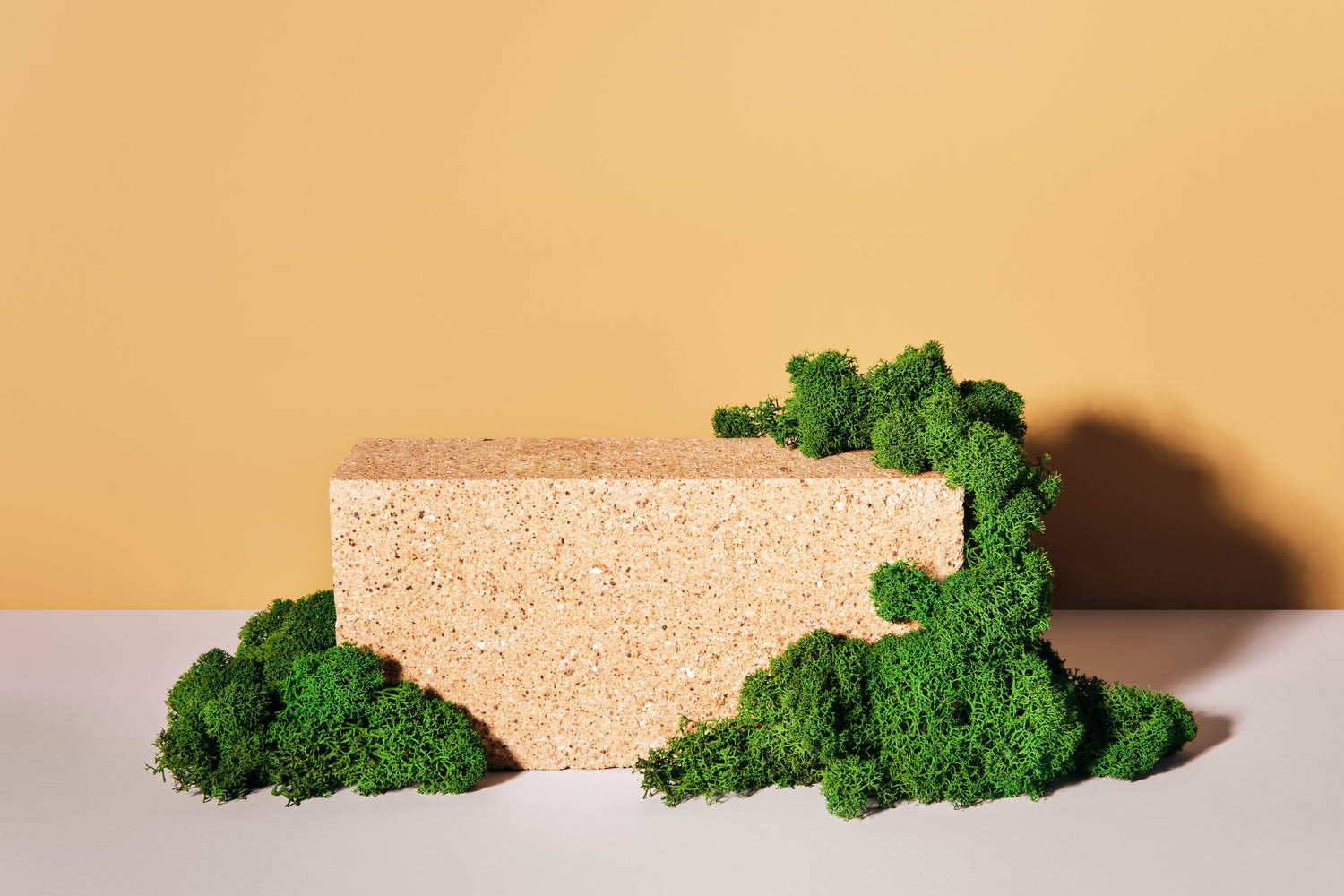
For much of modern history, the materials used to construct our homes, schools, and workplaces have relied on petroleum and other carbon-intensive sources. While these materials deliver strength and performance, they also carry significant costs for human health and the planet.
Bio-based building materials offer an alternative. Made from living or once-living organisms, such as wood, hemp, algae, or agricultural byproducts like corn husks and rice straw, they draw from renewable systems rather than finite ones. In doing so, they reduce reliance on fossil fuels and point toward a healthier, more balanced way of building.

Designing With the Planet, Not Against It
Unlike materials such as concrete or PVC, which depend on nonrenewable extraction, bio-based materials make use of what already exists in nature. They act as carbon sinks, storing the carbon dioxide absorbed during growth, and often require far less energy to produce.
Some, like hempcrete or straw composites, can even enhance indoor air quality by regulating humidity. Others, such as mycelium, can be grown into exact shapes, cutting waste and rethinking the very nature of production.
At Flora Materials, we see this as designing in partnership with the planet: replacing extraction and pollution with regeneration and performance.

The Many Forms of Bio-Based Materials
What's so exciting about the bio-based materials field right now is the incredible diversity and opportunity for innovation.
You have your better-known materials like wood and engineered timber, which store carbon naturally while enabling taller, stronger, and more efficient structures. Cross-laminated timber (CLT) has shown how renewable materials can perform at scale, combining architectural freedom with sustainability. The Carbon12 building in Portland, Oregon, one of the tallest timber structures in North America, is a striking example of how CLT can deliver commercial-scale performance while drastically reducing embodied carbon.
Other bio-based systems, such as hempcrete and straw composites, use agricultural byproducts to create lightweight, insulating materials that absorb carbon and regulate indoor humidity.
Mycelium, the root network of fungi, can even be cultivated into bricks, panels, or tiles that are lightweight, fire-resistant, and fully compostable, reshaping how we think about material production itself.
At Flora Materials, we’re exploring the next step in this evolution through tulip bulbs. (Yes, the spring flower!) Sourced from agricultural byproducts of the floral industry, these fibers are transformed into a renewable surface material that embodies circular design and local resource use.
The innovation doesn’t stop there. Across the industry, byproducts such as oyster shells, corn grit, and paper pulp are being reimagined into durable, beautiful materials—proof that waste can become a regenerative resource. Together, these approaches show that sustainability and design excellence can not only coexist but inspire one another.

The Road Ahead
Challenges remain. Building codes and certifications are still catching up, and scaling production is essential to achieve cost parity with conventional materials. Yet the momentum is undeniable. As industries commit to net-zero targets, demand for materials that deliver both performance and sustainability continues to rise.
At Flora Materials, we believe the future of construction is bio-based. We are working to create a world in which renewable resources, circular thinking, and beautiful design work together to create spaces that are as healthy for people as they are for the planet.
Through innovation and collaboration, we’re building toward that regenerative future, one material at a time.



Leave a comment
This site is protected by hCaptcha and the hCaptcha Privacy Policy and Terms of Service apply.